


Cystoscope
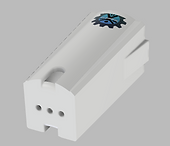
Task 1: Photon Engine "Widget" Sketches & CAD Model
-
Given a 3D printed object to sketch and model in Fusion 360
-
Contains laser, camera, and light source for cystoscopy procedure
Task 2: Redesign Photon Engine ("Widget")
-
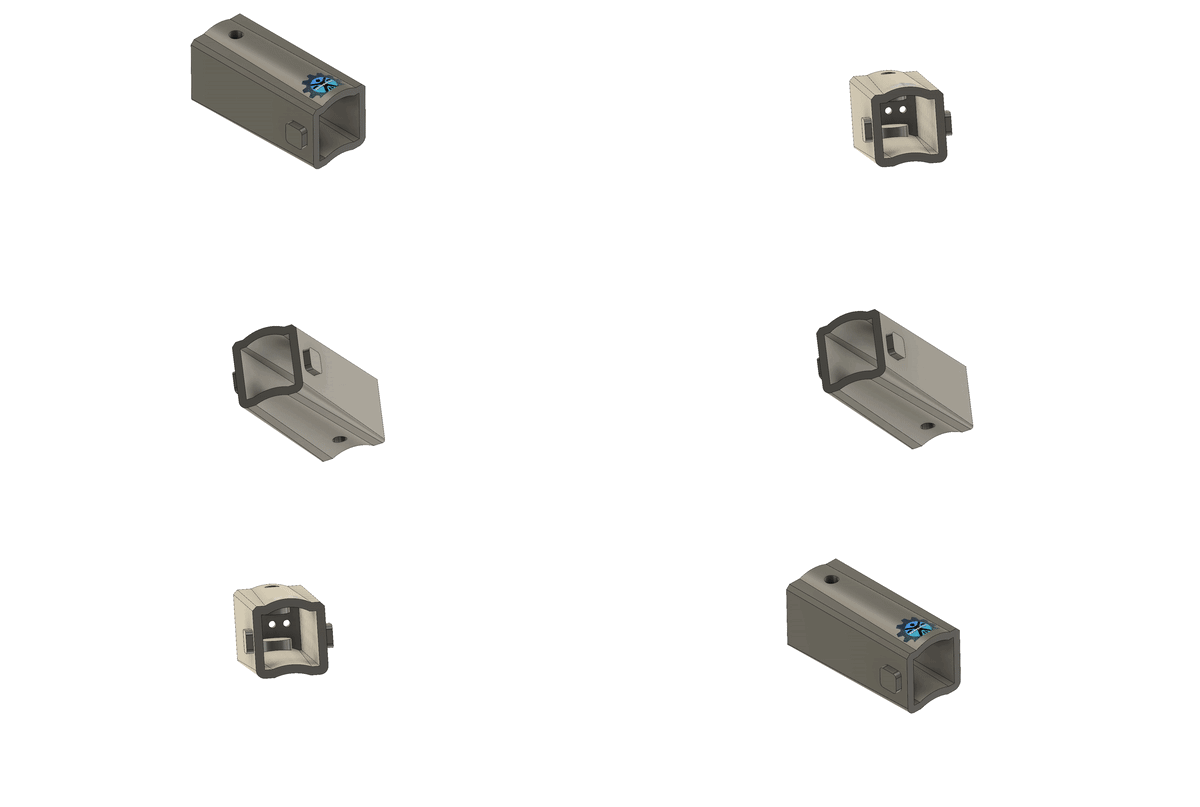
Design photon engine to be manufacturable for low-cost injection molding
-
Designed to be manufactured as a one-shot injection mold without up-and-aways or side actions
Task 3: Design a Sheet Metal Fixture for Photon Engine Calibration
-
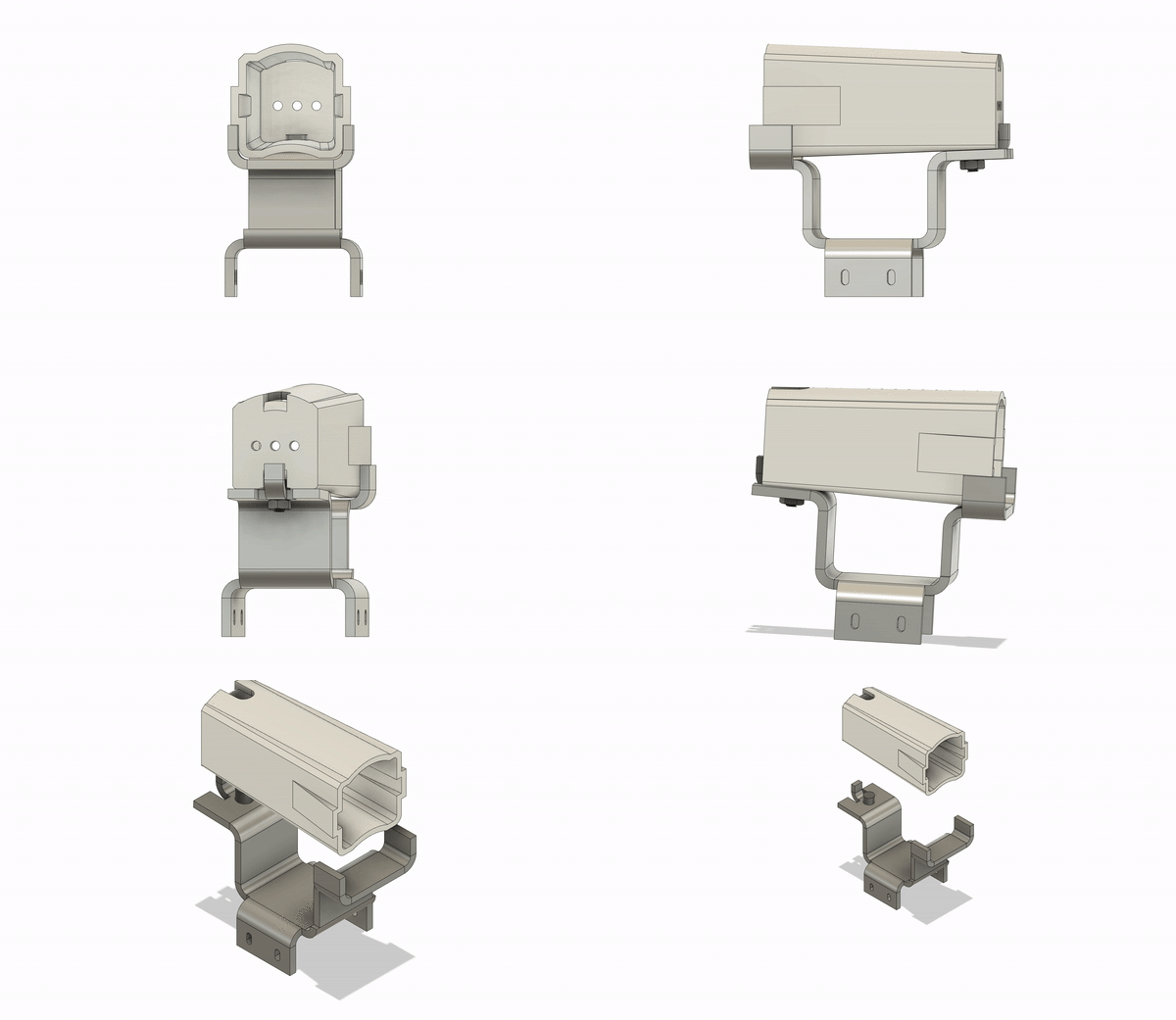
Design a sheet metal fixture to align and support the widget using sheet stainless steel
Task 4: Design a New Cystoscope: Sketches and CAD Model
-
Cystoscopes are used to view the urinary bladder through the urethra. Cystoscopes have an outdated design that can be difficult to hold and operate.
-
Tasked to design a more compact, aesthetic cystoscope that is less intimidating for patients and more ergonomic for urologists
-
Design Requirements: Power connection, inlet/outlet tubing for water flow, flow valve control mechanism, and a widget that contains a photon engine for imaging.
Initial Design Sketches:
Final Design - Fully manufacturable :
Manufacturing:
-
Cystoscope and widget are fully manufacturable for low-cost injection molding
-
Designed using draft analysis and FEA
-
Disposable
-
Manufacturing Cost: $54.6
Design Characteristics:
-
Ergonomic handle with rubber grip
-
Able to use with one hand
-
Scroll wheel valve control + easy inlet/outlet luer connections
-
Camera, light source, and laser are contained internally
-
20-degree sheath angle for a natural position during the procedure
-
Chords and tubes directed away from the patient
-
Power Chord Strain Relief
Mitral Valve Reconstruction
Task 1: Reconstruct Mitral Valve from an MRI
Task 2: Design a mitral valve sewing cushion in CAD that fits the specific anatomy of a patient
6-Line IV Manifold
Task: Design a 6-line IV manifold with clear line identification for ICU beds
Undisclosed at this time.









Masters Project Design Process
Step 1: Identify Clinical Need
-
MICU clinical observation
-
Interview doctors, nurses, and respiratory therapists
-
Mind-map observations and interview results
-
Investigate root causes
-
Cluster needs
-
Importance vs Satisfaction ranking by stakeholders
-
Identify market sizes
-
Filter needs


Step 2.1: Solution Ideation + Prototyping
-
Develop innovation targets + mitigations
-
Ideation brainstorming
-
Geneology mind-map (break down need)
-
Pain points
-
Killer experiments
-
Solution landscaping + ranking
-
Solution deep dives
-
Clinical value propositions for stakeholders
-
Initial business model: break-even analysis
-
Sketches, wireframes, morphological box
-
Present top 3 solutions + stakeholder feedback
-
Reimbursement plan
-
Top-down revenue model w/ gross margin
Step 2.2: Quality Management Systems
-
Device Classification, Predicates
-
Applicable Standards
-
Product Requirements Specifications
-
Traceability Matrix
-
uFMECA - Procedure Steps & User Journey
-
dFMECA - Design Risk and Severity
-
Design Verification Test Plan
-
Design History File
-
Human Factors Plan
Step 3: Higher Fidelity Prototype
-
Develop core team structure
-
Device functional decomposition
-
Manage sub-team plans & Deliverables
-
Killer experiments + protototype improvement
-
Preliminary human factor study
-
Scheduled technical updates
Pacemaker Energy Saving Algorithm
Purpose
The idea of this project stems from the desire to save as much energy as possible in a pacemaker. Pacemakers usually assume that the stimulation amplitude and duration operate around chronaxie (the point of minimum energy usage). I want to write an algorithm to find the minimum energy needed to stimulate a patient’s myocardial tissue. This algorithm would be used periodically by a pacemaker within the patient to automate finding the chronaxie point of stimulation and setting the pulse duration and amplitude of an appropriate safety margin. By using this algorithm, the pacemaker would have a way to find the value of minimum energy usage, thus extending battery life.


Fig. 2 - Flow Diagram
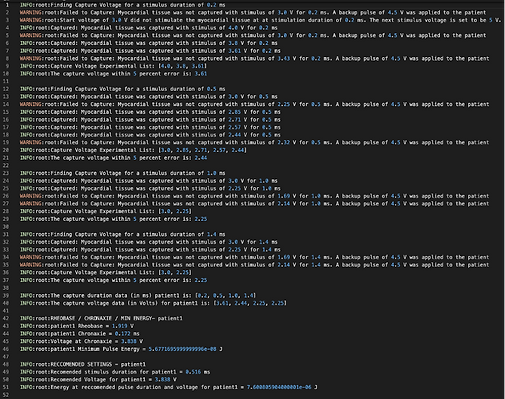


Fig. 3 - Strength Duration Curve
Fig. 1 - Functional Diagram Capture Threshold Detection Algorithm
Fig. 4 - Strength Duration Curve from Experimental Data
Fig. 5 - Log of Pacemaker Algorithm
Patient and Monitoring GUI
Purpose
Hospitals have a software database to keep track of patients and their information. To create a patient submission or add patient information to the database, a user must interact with an interface to input this information. Conversely, a user must be able to interact with an interface to retrieve patient information from a monitoring station. This purpose of this project is to create Patient Monitoring System that has a patient-side client (with a GUI), a monitoring-station client(with a GUI), and a server/database that allows patient data to be uploaded and stored on the server and retrieved for ad-hoc and continuous monitoring.
Coding Practices:
-
Server with patient database
-
Runs on virtual machine
-
Modular Code
-
Unit testing to ensure all functions work as expected
-
Unit testing done in parallel with code development
-
Continuous pytest integration with gihub
-
Version control and branch editing
-
Adherence to PEP-8 code formatting
-
Function docstrings
-
Use of issues and milestones to track development progress.
Heart Rate Sentinel Server Analysis
Purpose
The goal of this project is to build a centralized heart rate sentinel server. This server will be built to receive GET and POST requests that contain patient heart rate information from mock patient heart rate monitors. It should store this data so that patient information over time can be recalled. When the server receives a tachycardic heart rate for a patient, the physician should receive an email warning them of the situation. So, if a new heart rate is received for a patient that is tachycardic, the email should be sent out at that time. The tachycardic calculation should be based on age.
POST Requests
-
Add new patient
-
Add new attending
-
Add heart rate to patient
-
Post an average heart rate given a date/time
GET Requests
-
Get tachycardic status of patient
-
Get average heart rate
-
Get average heart rate since a certain time
-
Get information on all the patients of an attending physician